
Execute re-stock


Becoming a Trainer
1/
8
Learning Objectives
The Manager and Trainer should work towards achieving the below learning objectives during the on-top training & practice-on-shift culminating in a passed validation.
Learning Objectives: Learn how to train a Juicer in a Training Module following our Training Mantra
Mantra: Learn how to train a Juicer following our Training Mantra
Platform Expert: Become an expert in all training material
Use checklists: Setting the expectations and how to live up to them
Adapt The Approach: How to adjust training approach to Juicers need and level
Use Teach The Teacher: Understand when and how to apply
Push Speed, Maintain Quality: How to make fast Juicers without compromising quality
Validation: How to validate a Juicer
The Fundamentals
Before any person can “become a trainer”, it is important to know the fundamentals of training in the company. The Trainer must study all elements of “Training Introduction” for the juicer level as well as other supporting material about training to get an understanding of the information and tools available to carry out a successful training:
Training Introduction (e-Campus):
- Training Mantra: Our fundamental “recipe” of training a Juicer
- Training Platforms: Brief overview of the platforms used for training
- The Training Journey: The training journey all employees must go through
- In-store Onboarding: Following up on the juicers in-store onboarding done by the Manager.
Become an Expert in Juicer Training
All procedures and information the Trainer has to train a Juicer in is all collected in e-Campus in various training modules corresponding with the Juicer training plan:
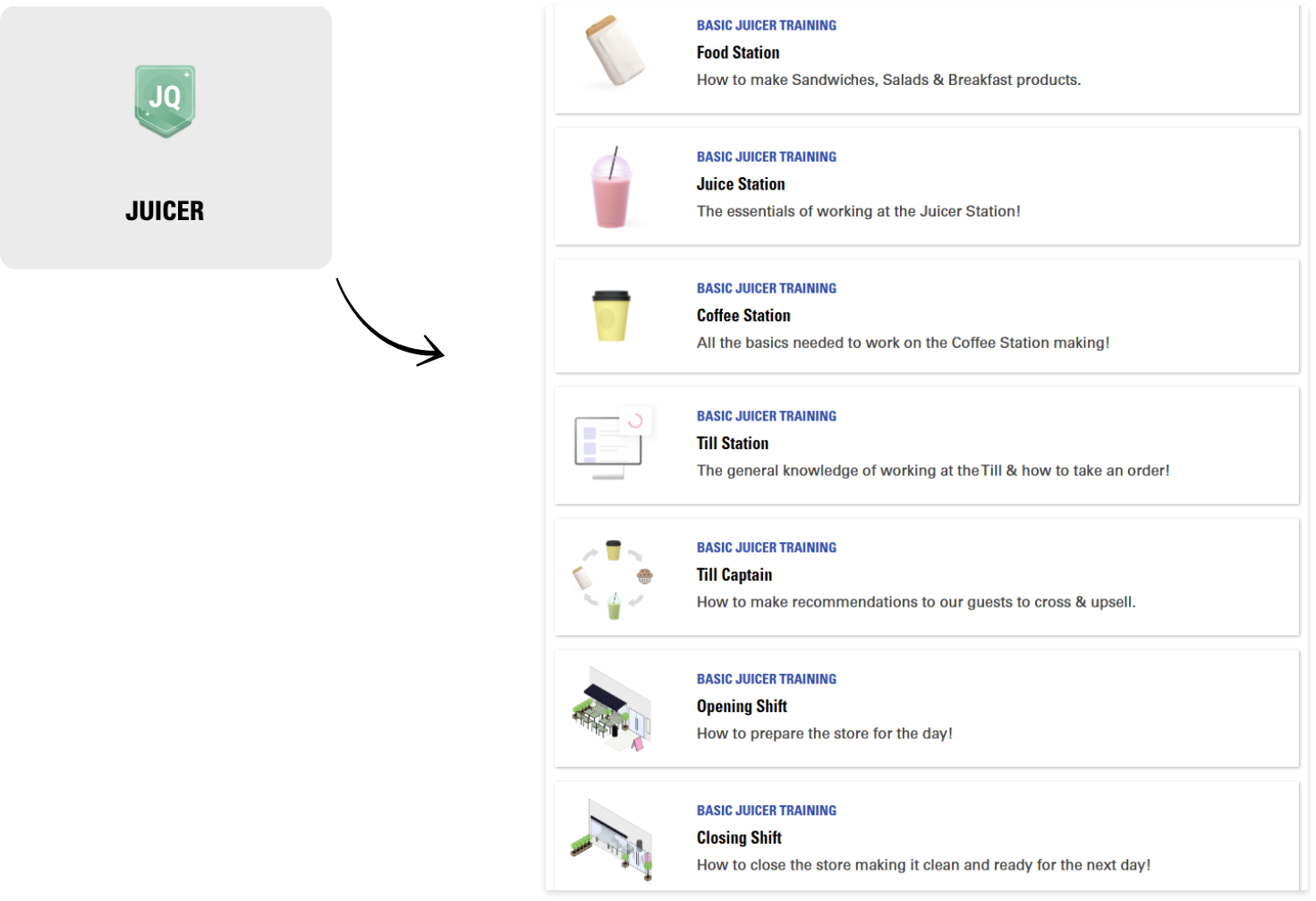
Each training module is divided into different sections. Each section contains the procedures and guidelines the Trainer should train a Juicer in. The trainer must know all procedures in the training program before beginning the module training:
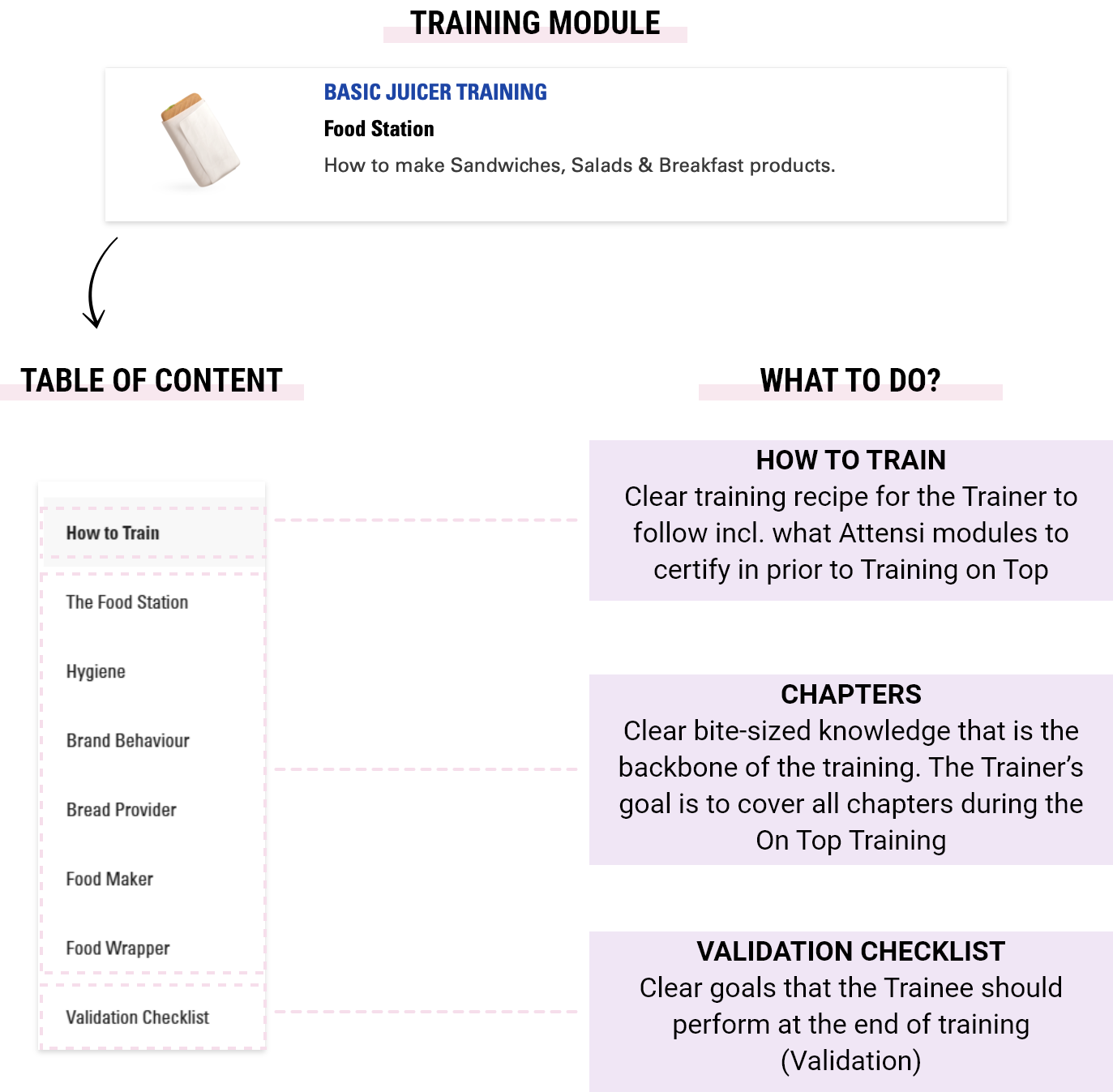
That’s the basic information & guidelines. Now, its time to dive into the day-to-day tools when training a Juicer!
Our Training Mantra
The Training Mantra is our fundamental formula to follow when training a Juicer. Following the Training Mantra will ensure that all Juicers are confident in their new role, and ensure they reach the desired skills to become a capable Juicer.
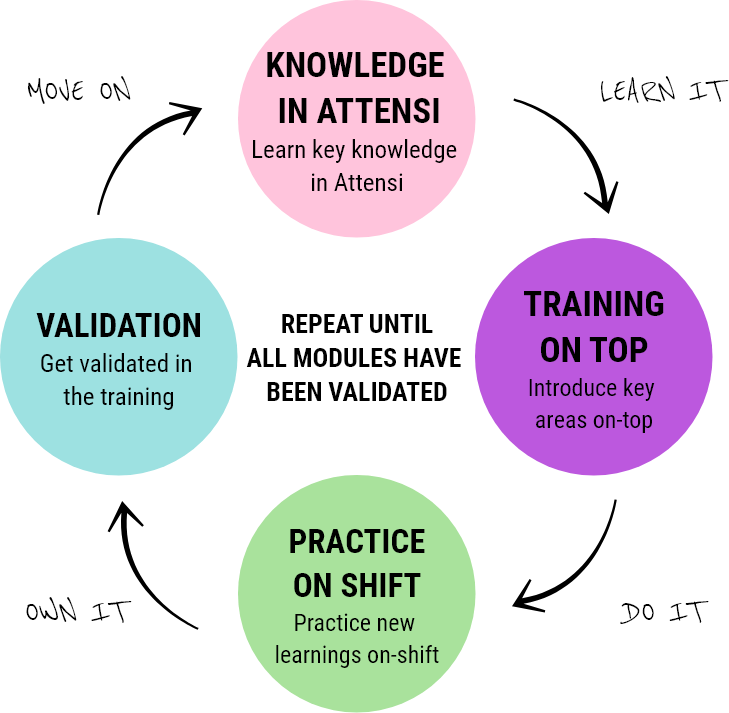
Why do we need a Training Mantra?
At JOE & THE JUICE it is required that we are adaptable to any situation. Our product range is continuously being developed and updated to stay relevant, so to give everyone a chance for success, we offer a bite sized training approach to everyone wanting to be a part of the team. All new employees deserve the same opportunity for growth - that’s why it is crucial for all Trainers to follow the training mantra in any given Juicer module training.
What does it mean?

When training a Juicer module, both the trainer and the Juicer must follow this process step by step: First, complete the relevant Attensi modules. Then, receive practical training alongside the trainer. After that, practice the training. Finally, the Juicer must be validated in the module. Only after a successful validation can training for the next station or module begin. Step by step, all the way!
IMS Sheets
Find your markets IMS Sheets here
Validation Checklist
Find your markets Validation Checklist here
Step 1: Knowledge In Attensi
The first phase focuses on building a strong theoretical foundation. Trainees complete mini-games in Attensi which cover station-specific hygiene, safety, and procedures. This phase ensures that everyone starts with a solid understanding of what’s expected, even before stepping behind the counter.
Attensi - Juicer Knowledge
Juicer to pass modules in different stages:
Juicer to pass modules in different stages:
- Juicer knowledge taught in an engaging & gamified way
- Juicer to play Attensi without any other preparation
- They are supposed to certify the module in 2-4 attempts
- Learnings in categories to conquer on step at a time
- Serves as preparation for practical training
Goal = Be confident in training area
.png)
IMS Sheets
Find your markets IMS Sheets here
Validation Checklist
Find your markets Validation Checklist here
Step 2: Training On-Top
In this phase, trainees begin to apply their theoretical knowledge in a controlled environment. With clear instruction from the trainer, they practice basic tasks and start to build confidence in their role.
Follow the Training Journey in the Training Introduction module when training.
Tools and Tips to use for all Training Modules
Following section provides a rundown of the tools we use for training in Joe & the Juice. Regardless of the module you’re training, it is important to incorporate following legacy training tips to keep training aligned, and offer all new employees same opportunities for growth:
Before Training
1. Use Checklist - Set the Expectations
It is important to set the expectations towards each other, from start to finish
What can the new employee expect from the Trainer and what can the Trainer expect from the Trainee? For example, the Trainee must complete the agreed Attensi modules prior to their practical On-Top training, and show up with a positive attitude, ready to get started.
In return, the Trainee can expect the Trainer to:
- Show up well prepared with an agenda for every training shift
- To communicate in an honest & constructive way
- Be present during all On-Top training shifts
- Guide and support the Trainee during the practice shifts
Furthermore, explain the expectations of the training and validation:
What is expected at the end of the validation? Starting out with communicating the expected end result will help the Juicer know what success looks like, build confidence as they progress during the week and reduce confusion in the role. Show them the goals in the e-Campus “Learning Goal” tab or relevant in-store checklists.
Why is it important for the trainer to be well prepared:
The new Juicer will expect you, as the Trainer, to show up prepared and confident in what you're doing. If you don not meet those expectations, you cannot expect the Juicer to meet yours in return. That is why it is crucial to lead by example - by coming prepared, being professional, and live up to the Juicers expectations. When you do that, you earn the right to expect the same commitment and attitude back.

2. Give Clear Instructions with the right approach
At Joe & The Juice, training isn’t just about learning skills—it’s about Growth. A strong training environment means that trainees not only receive instructions but actively engage in learning, ensuring they feel included and confident in taking on responsibility. Trainers play a key role in guiding trainees through the learning process by applying Directive and Supportive Behavior at the right moments.
The Juicer/Trainer model illustrates this journey. Understanding when to apply Directive and Supportive Behavior helps trainers progress through this model effectively.

Directive Behaviour
This step involves providing clear instructions, demonstrating tasks, and setting expectations. At the start of training, Juicers benefit from having a clear structure of what they need to learn, and letting them feel a sense of confidence to feel comfortable in their role.
This step ensures that information is not just heard but processed and understood.
Directive training plays a crucial role when training On-Top. Trainees absorb information and benefit from clear guidance. This structured approach promotes Inclusion, ensuring that every juicer starts from the same place.

The "JA TAK "
When you give an instruction, you should expect a “JA TAK” in return every time. “JA TAK” is our version of “yes, chef” and it is a response tells you that they understood you. It also gives them a moment to slow things down and speak up if something isn’t clear.
This keeps communication clear and the bar alive. It will especially become useful at Showtime, where the music is pumping and the orders start flowing in.
3. Teach the Teacher
In Joe & The Juice, we have always utilised the learning method called Teach the Teacher. This is a method where the Trainer will make the Trainee explain back what they have learned as if they were now the teacher:
- First, teach the Trainee the procedure or task
- Practice the learning practically in the bar
- Let the Trainee teach it back to the Trainer in a role-play, where the Trainer acts as if it is the first time they are hearing about the procedure. If they can explain it back, and explain “The Why” behind each slang, you’ve done it right!
The more a Trainer has the capacity to practice Teach the Teacher, the more the Trainee will actively say out and explain what they are doing which will make the knowledge and training stick for their future shifts.
To get the most succesful training output, we are using the most efficient way of learning. Studies show that learning by doing and teaching the teacher increases the learning by 75-90%. In practical terms, that means that when your trainee is told that they need to teach you what they have been taught, they retain information better than any other way. Compare that to a lecture, reading the module or just observing the process, they will not even retain a fifth of what they need to know.
This is why we put an effort into the On Top shifts and Practice shifts by letting the trainee try and fail again and again. Soi, they are expected to fail - we are here to direct, guide and support them all the way.
The last 25% we conquer by first using Attensi to build the foundation and then demonstrate the whole process together with them.
If this is done correctly, your new trainee will get everything down before or during their validation.

4. Joe Slangs
Over the years, we have developed multiple words or sayings which are very specific to our company and what we do. The beauty of a Joe Slang is that a single word or saying carries a lot of weight and information.
So, instead of giving a long explanation, the Joe slangs can just be used. The most well-known slangs are listed below. They can also be found in each module where they are relevant.
- “Ambiance”: Is the vibe a Juicer or a team can create purely based on their energy & positive attitude
- “BTC”: When you are working in the bar: Behind the Counter
- “Brand Behaviour”: Is our fundamental way of behaving towards our guests
- “Clean on the go”: Is a workflow used to always keep our work-stations clean and tidy
- “Crispy and thin is the way to begin”: Our saying for how we want the bread to be grilled
- “DCWF”: Daily Concept Workflow is our entire procedures carried out from Open to Close in the store
- “Don’t be afraid - activate”: When we need to operate 2 or 3 till station because the queue is long
- “FIFO”: Our fundamental rule when rotating stock: First in, first out
- “Finish one ingredient at a time”: Grab enough of the ingredient, so you don’t have to go back and grab more
- “GTD”: Get things done is a mindset of wanting to resolve a task or an action in the store
- “IMS”: Ingredients: What is in the product - Measurement: How much of each ingredient - Sequence: And when should you add the ingredient
- “If you clean everyday, you don’t have to clean everyday”: Our saying for cleaning the store or equipment properly, so it remains clean
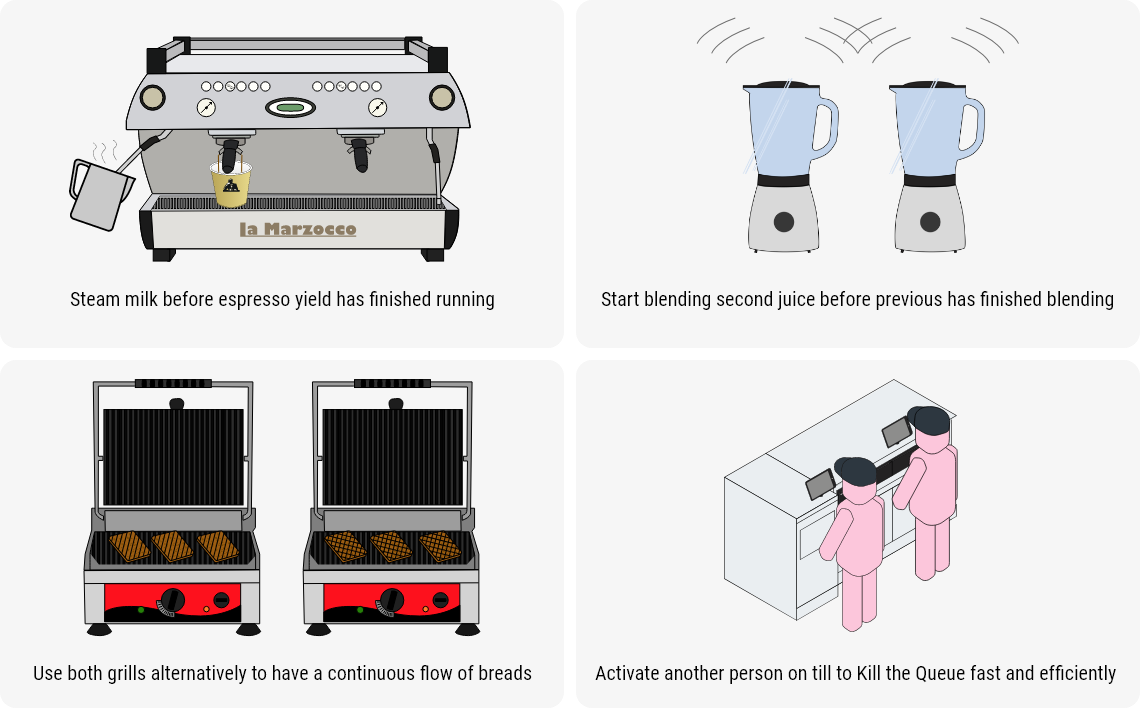
- “Kill the queue”: When we speed up the till flow by adding one more person on till to free up the length of the queue
- “One rotation”: The movement we do when cleaning the centrifuge sieve and washing the blender can
- “POS”: Point of sales is our Till Station
- “Palermo Shift”: Is a shift which does not include either opening or closing
- “Signature Roast”: The squared diagonal pattern in the bread when it is grilled to perfection
- “Slow Press”: Slowly pressing ingredients in the centrifuge to get most juice out of each ingredient
- “Slow is smooth and smooth is fast”: When trying too hard or rushing in the bar, it will actually make you slower. Always work in a smooth pace doing things the right way without making a big mess
- “Snake Pesto”: The technique used to apply pesto on the bread making sure every bite has pesto in it
- “Spill cup”: Is the cup used to being both time and waste efficient switching between two blender cans working with the centrifuge
- Wrap tight”: Is how we wrap our sandwiches to make sure it’s tight and ingredients don’t fall out
- “One apple more, one less store”: Refers to applying slow press so we don’t overuse apples which is bad for the waste. If we stop wasting ingredients we can open more stores!
- “It’s never the coffee”: In situations where a guest had a bad day, we must accept that even the best product can't fulfil their needs. At this point, it is all about how we deal with the scenario and let the guest leave happy.
Include as many Joe Slangs as possible in each training with the Trainee. This will make them feel included in the culture, and speed up the communication behind the bar. Why not also use Teach the Teacher to actually make the Joe Slangs stick?!
5. Be present!
When a Juicer is being trained in the store the first day, they know little to nothing about our procedures. We must not underestimate the importance of being present next to them and constantly communicating & guiding them.
Every second counts and is an opportunity to grow. We all remember our own training period and how overwhelming it could be not knowing what to do next. It is the Trainer’s responsibility to make sure this does not occur!
The Trainer must direct, observe, guide and support hem all the time and focus 110% on the person they are training.
What good looks like:
Use the training checklist so you and your trainee get through everything
- Come prepared to each training shift. If you are prepared, you can expect your trainee to be prepared.
- Use Training checklist. Helps both you and your trainee getting to the goal together
- Give clear instructions. Use the Joe Slangs for quick and easy understanding of a procedure.
- Expect a “Ja Tak” in return every time.
- Use Teach The Teacher to determine if your instructions went from heard to understood.


Checklist
Find your markets Checklist here
IMS Sheets
Find your markets IMS Sheets here
Validation Checklist
Find your markets Validation Checklist here
Step 3: Practice On-Shift
The Juicer will begin working more independently, applying what they’ve learned. The focus is on developing speed, efficiency, and consistency, all while maintaining the company standards - even during peak hours of operations.
Validation Checklist
During the practice shifts, the goal as a trainer is to take your trainee from good to great.
The in-store validation checklists are fairly simple; When your trainee can do the procedures on the list fast, correct and teach the teacher, they can be checked off.
During the practice period, check off each of the points day by day, so that at the validation period, the trainee should have all the boxes ticked, and they are now ready for a spot-check from the manager.
Supportive behavior
To be successful in this requirement, we shift from the delegating and instructing approach from the On-Top Shift, to a more supportive behavior.
This step involves stepping back, asking questions, and encouraging independent thinking. As trainees gain experience, opportunities for problem-solving and confidence-building become more important.
This approach becomes essential in the Practice Period, where trainees transition from following instructions to applying skills independently. A supportive trainer fosters a culture of Positive Attitude, where progress is the goal, rather than perfection.

Push speed, maintain quality
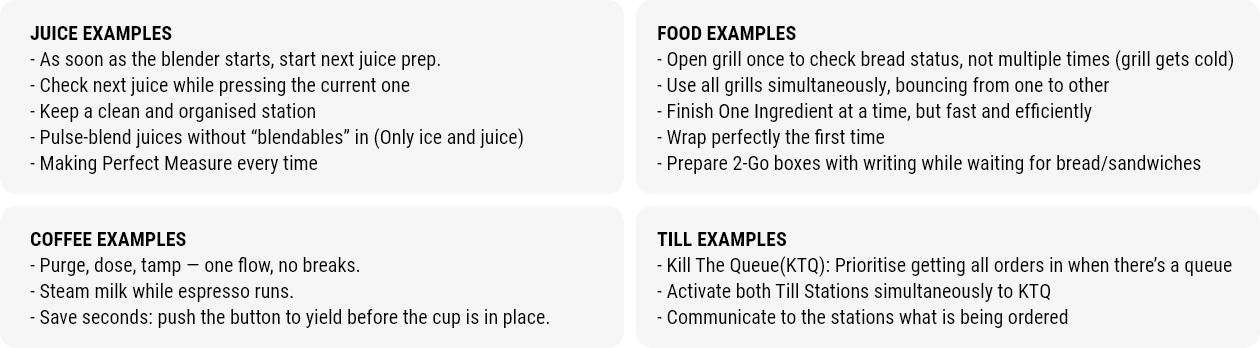
At this stage, the trainee should know the basics, so begin introducing speed. Demonstrate first, then guide them to replicate it.
Build speed through practice and encouragement. Remember: “slow is smooth and smooth is fast.” If mistakes increase, slow down, practice, and rebuild speed gradually.
Prepare for Showtime with validation and speed tests. These set the minimum standard—speed can always improve, but never at the cost of quality.
What good looks like:
- Check off validation day by day. Both you and your trainee knows exactly what to prioritize
- Fast, correct and Teach The Teacher. When your trainee excels, move on!
- Be supportive. Ask the right questions and acknowledge good effort.
- Push speed, maintain quality. Never sacrifice quality over speed - work on quality first and gradually build speed. * You can use the time limits on the checklist to check your trainees current level.


.png)


IMS Sheets
Find your markets IMS Sheets here
Validation Checklist
Find your markets Validation Checklist here
Step 4: Validation
Validation is the final step of each training module. It fconfirms that the trainee fully owns the station - understanding all procedures and consistently delivers them to standard, even without supervision. Validation takes place BTC and on-shift. At the start of the validation shift, go through each step with the trainee and use the time to fine tune the things that might need some more attention. Remember, they need to be able to do each step fast, correct and Teach the Teacher.
The Culmination - Training Validation
Validation is the final step of each training module. It confirms that the trainee fully owns the station—understanding all procedures and consistently delivering them to standard, even without supervision.
Validation takes place behind the counter and on-shift. Before starting, the trainee must:
- Complete all relevant Attensi training
- Have On-Top training passed in WP2
Use e-Campus as the reference. Each module includes clear Validation Learning Goals outlining exactly what the trainee must demonstrate.
A trainee:
- Passes → moves to the next module
- Fails → requires more on-shift practice and feedback before re-attempt
VALIDATION SHIFT (SHOWTIME): Treat this as a performance moment. Begin with a test validation to identify any gaps, then use the shift to sharpen speed and consistency. A manager will complete a spot-check using the same checklist. Ideally during a Showtime shift to assess Speed, Speak, and Support.
SPOT CHECK (Manager only):
- Run a Showtime Test according to the checklist
- Start with Teach The Teacher on all hygiene related matters*
- Teach the teacher on selected points in the checklist
- Run a Showtime Test and Brand Behavior test
If the trainee can sufficiently and confidently work and explain procedures to the Manager, the trainee has passed the validation and can move on to the next module
If the trainee cannot work and explain procedures to the manager up to standard, the trainee has failed and more practice is needed.
*If trainee fails explaining or executing in hygiene, more training is needed and validation cannot be passed.


How to videos

IMS Sheets
Find your markets IMS Sheets here
Validation Checklist
Find your markets Validation Checklist here
Practice learnings objectives: On-shift
Learning objectives in practice
Set High Expectations → Come prepared, aim high, deliver excellence, and inspire new Juicers to go beyond!
Adapt Training Approach → Not everyone learns the same! Observe, adjust, and teach in a way that clicks for each trainee.
Build Likeability → Respect + energy = the best learning environment. Make training engaging, not intimidating!
Use 'Teach the Teacher' → Have trainees explain back what they learned. If they can teach it, they truly know it!
Plan & Structure Training → No guesswork! Follow a set schedule to make the most of every training session.
Establish Mutual Expectations → Trainer teaches, trainee commits—both must be accountable for progress.
Pass the Assessment → The goal? Train a Prospect Juicer to JQ level with confidence and skill.
Following exercises must be carried out as part of the training:


Closing Tasks
Deep Clean Centrifuge

Closing Tasks
Espresso Machine Cleaning
IMS Sheets
Find your markets IMS Sheets here
Validation Checklist
Find your markets Validation Checklist here
Cleaning Tasks

Clean Seating and Tables

Clean Trash Bins in Customer Area

Clean Bar Bins

Clean Bar Lamps + Speakers

Clean Cleaning Tools

Clean Drains

Clean Floor Panels

Clean Ice Machine

Clean Sandwich Grills

Clean Walls and Pictures

Clean Fridges

Deep Clean Stockroom + Fridges

Clean Bar Filters

Clean Fruit Baskets

Clean Dishwasher

Clean Sinks

Clean Centrifuge Cave

Deep Clean GB5

Transport Wagons
Bar Cabinets
How to handle Cleaning Detergents

Dishwasher Detergent
Cafiza
Multipurpose
IMS Sheets
Find your markets IMS Sheets here
Validation Checklist
Find your markets Validation Checklist here

Prev
13/
8
IMS Sheets
Find your markets IMS Sheets here
Validation Checklist
Find your markets Validation Checklist here
